Brain Bites is all about broadening your reach with easy-to-digest psych knowledge! Join me for quick, interesting medication and brain science tidbits! Elevate your therapy practice with insight and data from your friendly online psychiatrist!
Bioidentical hormones: miracle or marketing?
|
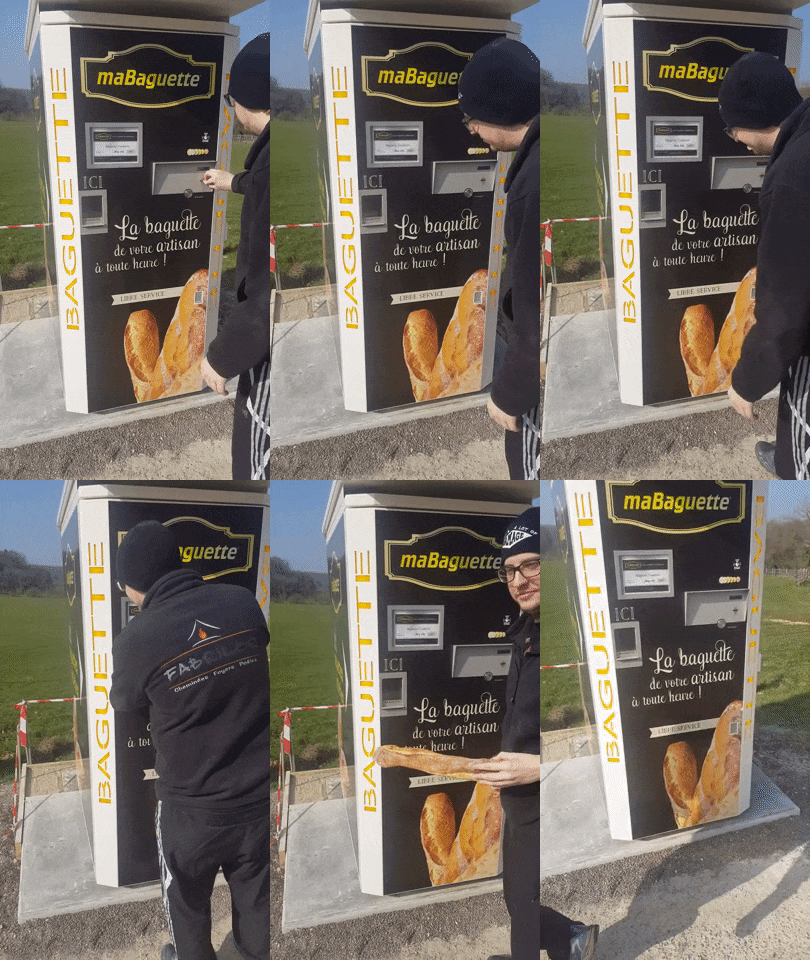
I was an art ed major in college before I switched to premed. Yes, a room full of kids with paint sounded like fun to me at that point of my life (before I experienced the terror of my own children with art supplies). The summer before I changed majors, I went to study in Paris! I imagined strolling down a cobblestone street, stopping at a charming little boulangerie, and walking out with the most perfect baguette ever created by human hands. Golden. Fluffy. Maybe handed to me by a flour-dusted baker with a knowing smile.
What I got instead? A mass produced, factory-made baguette in a plastic bag from a supermarket. Wah-wah. Turns out, not every baguette in France is a delicate, artisanal masterpiece. Parisians often buy the cheapest one they can find and shove it into their bag like it’s just… bread. The same way not everything labeled “bioidentical” is pure, superior, or even all that special. Just like a supermarket baguette and a handcrafted one might have the exact same ingredients, bioidentical hormones and standard hormone therapy have the same molecular structure. But one is wrapped in fancy marketing. That's what this week's video talks about: bioidentical hormones. When some people think about natural supplements or treatments, they imagine that wizened medicine lady with her mortar and pestle smushing up a bunch of herbs she plucked from the walls of a canyon in the middle of a rain forest. But no. This stuff ALL comes from a lab! You probably have a few clients going through the menopause transition so this is a topic that may come up when they're rehashing their latest midlife struggles with mood swings, brain fog, disastrous sleep... And then they say "I'm thinking about bioidentical hormones since they're natural and safer" Because you’re a mental health badazz, you know hormones 100% affect mental health. But you're probably not a hormone whisperer (although if you are, Reader, we need to talk!), and this question isn’t going away anytime soon. So let’s make sure you’ve got the right info. Here’s what's important to know about bioidentical hormones:
So what should clients do? Encourage them to talk to a provider who actually knows their stuff. Not a TikTok menopause master or their neighbor’s cousin who swears by progesterone cream. A real, informed expert. (There are a bunch available through the Menopause Society) You don’t have to be a hormone expert to help your clients make smarter choices. You just need solid information (minus the fancy marketing)! Things aren’t always better because they're made by some artisanal magician. Whether it’s baguettes or bioidentical hormones, marketing can make things sound way more magical than they really are.
Fresh bread... mmmm.... Cheers to healthy brains, Dr. B Jessica Beachkofsky, MD Your friendly, online psychiatrist! P.S. Here’s the bioidenticals video link again P.P.S. The French take their baguettes so seriously that in 1993, they passed a law called the Décret Pain that dictates exactly what can (and can’t) go into a baguette de tradition. No additives, no preservatives, just flour, water, salt, and yeast. Bioidentical hormones? Not quite as tightly controlled. Just something to chew on. 😉 |

Welcome to Brain Bites with Dr. B!
Brain Bites is all about broadening your reach with easy-to-digest psych knowledge! Join me for quick, interesting medication and brain science tidbits! Elevate your therapy practice with insight and data from your friendly online psychiatrist!
It’s almost Thanksgiving in the US and I’m trying to be reflective (and patient while I wait for Black Friday deals so I can buy an adorable mini label maker for 4$ off!) I think every therapist knows how having a gratitude practice is good for you. They’ve been shown to improve mood, lower stress hormones, help people sleep better, strengthen emotional resilience, and lose weight. Nope, not that last one. Especially if you love stovetop stuffing as much as I do! (Not an affiliate but if they...
"Warmer... warmer.... WARMER!... HOT!!!" I know you remember the hot/cold game, right Reader? Someone hides something, like a water bottle or a precious heirloom tiara, and there's one person looking for it. Everyone else can give guidance based on temperature where HOT means you're right on top of it!!! (If only it was as easy to find my sunglasses when I don't put them back where they "belong". And I look with my eyes OPEN!) It was a fun game when I was 9 and it was fun to play with a...
I’ve been a psychiatrist for a while. It’s not often that I’m “wowed” by some new piece of information on a topic that has been the bread and butter of what I’ve been doing for almost 20yrs. But reading this article about CBT-i had a fascinating sleep pearl that has nothing to do with the main topic which is how to use CBT-i to help get people off their sleep meds. That magical little tidbit? People who get 7hrs of sleep have lower all-cause morbidity and mortality. Not 6hrs Not 8hrs 7hrs....